
Drivers are in short supply everywhere, in every country
To this day, he can be seen on the roads: Brummi, the iconic figure of the transport industry. This rotund character with a cap and broad smile has enjoyed cult status in the sector since the 1970s. Today, the human counterparts are equally revered, and transport companies are scrambling for anyone who can drive a truck, as there is a driver shortage in Europe and supplies are threatened.
Chaotic conditions after Brexit
Initially, it seemed as if only Great Britain was affected. As early as the turn of the year 2020/21, the flow of goods was dramatically disrupted due to difficult transitional arrangements for the UK's withdrawal from the EU. Some even feared that the British would have to spend the holidays without champagne and Bresse chicken. Today, the issue is less about luxury holiday products and more about the driver shortage threatening basic supplies. Brexit and the coronavirus pandemic have led to a loss of 19,000 professional drivers in Great Britain, according to calculations by the Logistics UK association. Furthermore, in September 2021, the logistics sector is facing a shortage of far more than just drivers.
UK logistics in turmoil
There is a shortage of skilled workers in warehousing, transport management, and forklift operation, among other areas. Over 25% of the companies surveyed reported staff shortages in 2021, a significant increase compared to the previous year, when the figure was around 20%. Three-month visas are less attractive to foreign workers than the EU labor market. Truck drivers, in particular, complain about working conditions in the UK, citing a lack of secure parking for rest periods. The British government also acknowledges a shortage of 1,400 overnight parking spaces.
Logistics without professional drivers
According to the German Transport Journal (DVZ) from October 2021, the demand for professional truck drivers in Germany alone is currently between 60,000 and 80,000. Help has so far come from abroad. More and more drivers have relocated their workplace to Germany, usually due to better working conditions and wages than in their home countries. Conversely, transport companies have access to a vast pool of cheap labor. For many, this appears to be a win-win situation. However, since the beginning of this development, the quality of transport services has suffered. An increasing number of semi-skilled workers and a decrease in skilled labor have hampered the digitalization of freight transport. At least goods still get from A to B. The fact that drivers are now lacking in their home countries has set a spiral in motion. Transport companies in Poland, whose drivers have signed contracts with German companies, recruited drivers from Ukraine. Ukraine? An endless cycle is unfolding, in whose dark vortex price gouging, greed, and ruthless competition run rampant.
Corona is exacerbating the emergency
During the height of the pandemic, transport companies continued to deliver food and other goods from producers to consumers. So far, so normal. What didn't happen was the training of new drivers. In Germany, one reason for the decline is that 30,000 drivers are retiring, while only 17,000 young people are entering the profession. Another cause lies in the suspension of compulsory military service. The German armed forces trained approximately 10,000 drivers annually, and these drivers are now missing. Finally, many experienced drivers adapted to the conditions imposed by the pandemic. Some retired early. Others were unable to complete their driving tests to the required extent. Now, the competition for drivers is fierce: With top salaries of up to €63,000 per year , transport companies in Great Britain are vying for anyone qualified to drive a multi-ton vehicle.
Even more demand from Poland
This can help Europe, but not the United Kingdom. Brexit makes the island nation unattractive to professional drivers. Complicated entry requirements and short-term work permits discourage most from considering an employer in Great Britain. Alternatives are emerging from Poland. There is a shortage of up to 120,000 transport workers in Poland, despite a total population smaller than Germany's. Experts attribute this significant demand to the increased share of EU freight traffic held by Polish haulage companies, which has now reached approximately 33%.
Solutions for customers and logistics
The signs in the transport industry already point to a future of autonomous vehicles. At least the legal framework permits the transport of freight with autonomous vehicles. Test tracks for driverless transport have been established, but production is still in the development phase. Scania is far ahead in Europe, though not as far as China and the USA, where Level 4 autonomous driving tests are already underway on public roads. In Sweden, where the motor vehicle authority has now opened a several-hundred-kilometer stretch of motorway for testing purposes, vehicle manufacturers are testing the Hub2Hub. However, experts don't expect results for at least five years – too long to allow the flow of goods to dry up. A Munich-based start-up offers hope, working on solutions for controlling trucks digitally and remotely. This is ideal for IT-savvy young people, and it is hoped that ideas like these will attract more young talent to the industry. Instead, something quite different is happening.
International migration patterns of workers
The idea of recruiting truck drivers from abroad with top wages is not new, although the reasons are different today than they were 15 years ago. Back then, there was no driver shortage, but drivers based in Germany earned more than their counterparts from abroad. For many years, the "new generation" of drivers came from neighboring European countries. The transport company profits, while the workforce is lacking abroad. This now affects more than just the transport sector. Brain drain describes the loss of academically trained professionals to other countries, which is now causing problems in almost all fields. Countries with relatively high wage levels exacerbate the effect. In France, unions are therefore demanding an increase in general wage rates and warning of the consequences!
stricter controls on cabotage traffic
Could better control of cabotage traffic ease the situation? At least within the European Union, this is conceivable. In cabotage, EU-based freight carriers take over transport in another EU country and carry the goods within that country. Many German logistics companies believe that there is more cabotage traffic on national highways than currently assumed and therefore desire stricter controls. This won't immediately alleviate the driver shortage. Nevertheless, a firm enforcement of cabotage regulations could lead to an increase in freight volumes in national transport, better wages, and thus a greater attractiveness of the job.
Today Britain, tomorrow the EU?
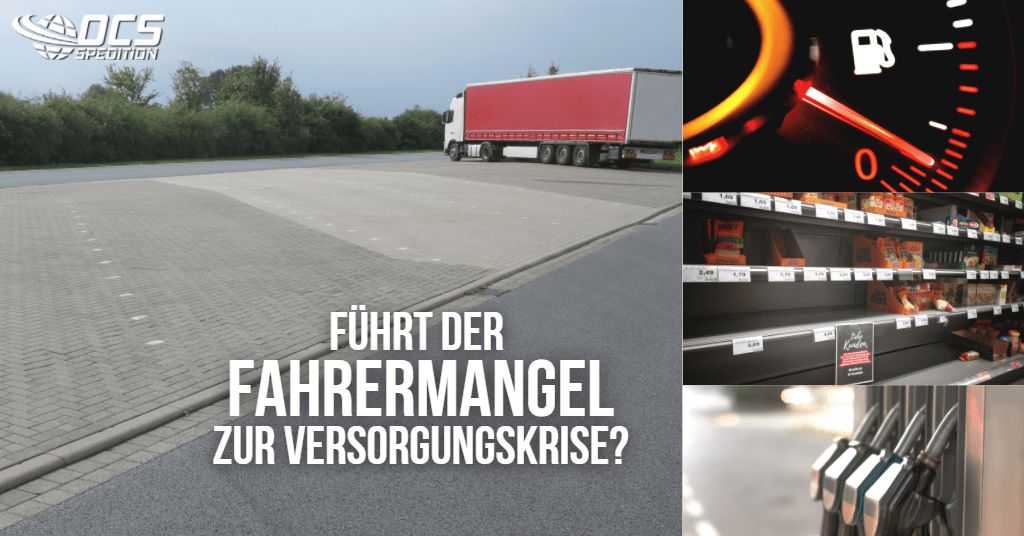
No fuel at the petrol stations, empty supermarket shelves – the situation in the UK is at times dramatic, but possibly a harbinger of what lies ahead for the rest of Europe. Staff shortages are affecting many sectors. Care work is just one example, and even agriculture is impacted. A lack of truck drivers and other skilled workers means that British pig farmers are left with unsold animals. This plunges livestock farmers into crisis as the next link in the chain: without transport, no one can slaughter. Even if the animals do make it to the slaughterhouse, there is a shortage of staff. Farmers have to procure more feed for their animals, and there isn't enough space on the farms for the next generation of piglets. Finally, farmers face fines if the animals exceed the slaughter weight. The number of emergency culls is rising. As dramatic as this may seem for Great Britain, the situation is not far removed from it across Europe.
Trade associations advise taking countermeasures
Similar to Logistics UK, the German Federal Association of Road Haulage, Logistics and Waste Disposal (BGL) the situation and recommends similar measures. These include improving the image of professional truck drivers. The image of the "truck driver" is still prevalent. Better training and more continuing education should make the profession more attractive. This can perhaps best be achieved by adjusting wages. On average, German truck drivers earn an hourly wage of €14.21. Semi-skilled drivers earn only €12.91. On average across Germany, skilled workers earn significantly more, namely €19.97 and €16.02 for semi-skilled workers. Who wants to submit to the conditions of the road under these circumstances? Ambitious young professionals have a free choice of career.
The OCS in this situation
Of course, we are monitoring the disruptions in freight transport, which are not solely attributable to the pandemic. The sophisticated logistics required by large shippers like online shops demand well-trained drivers. Thanks to long-standing contacts and a broad network of reliable transport companies, we know the expertise of the drivers we work with. Transporting demanding freight to Scandinavia, Poland, or Russia requires specialized personnel. We know the best. Call us before you encounter transport problems.