
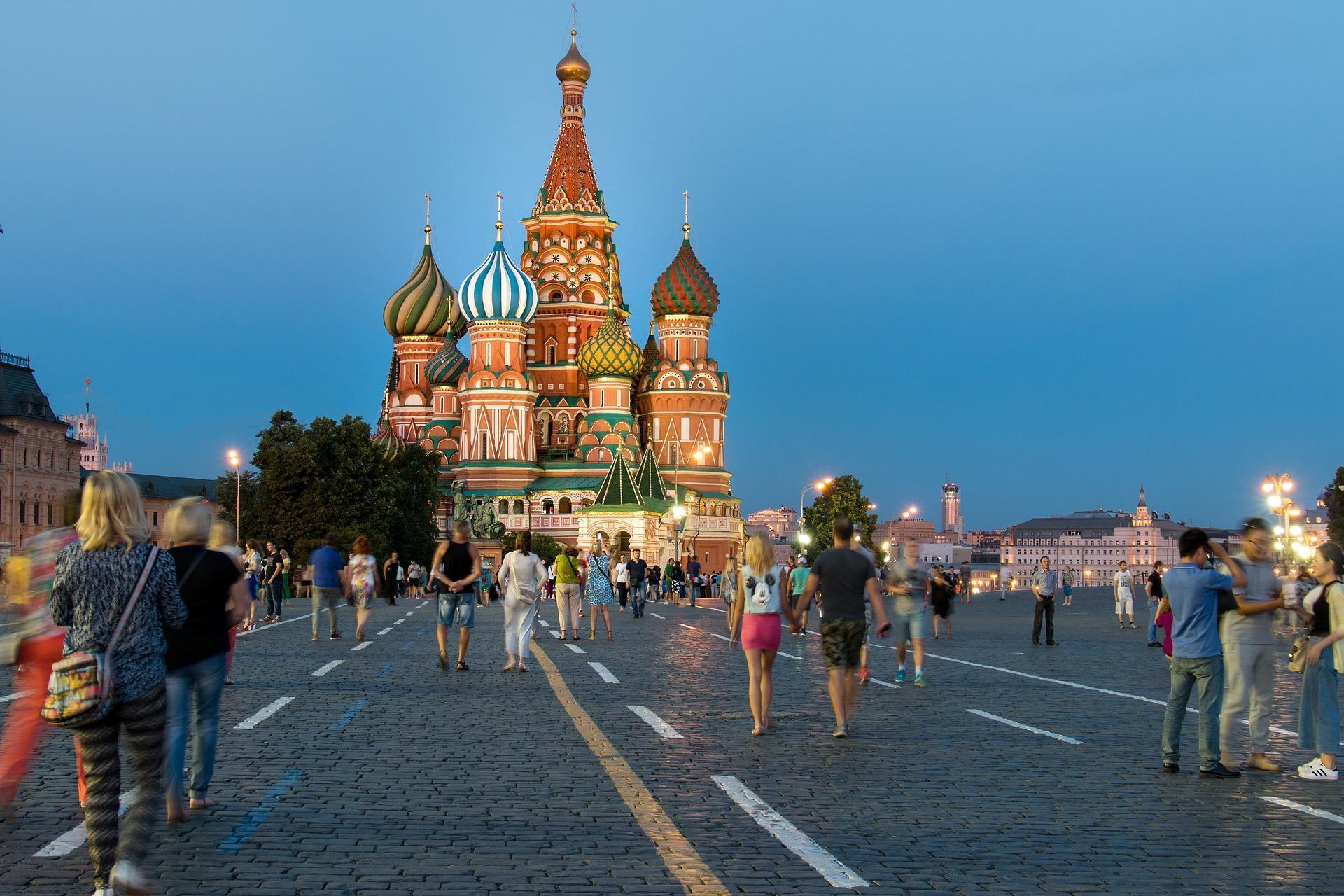
The sanctions imposed by the US against Russia back in 2014 continue to have a lasting impact on the economy between Germany and Eastern Europe. The penalties have also had extraordinary consequences for logistics and transport. In 2019, the measures will have been in place for five years – is it time to lift the Russia sanctions? OCS explains.
Our years of experience with transport to Eastern Europe have led us to observe developments in our eastern neighboring countries with increasing scrutiny in recent years. While not primarily with concern, we have nonetheless observed them with a certain degree of skepticism. It is no coincidence that relevant media outlets have reported losses in the billions for the German economy, losses that have been felt across every sector of the value chain. Cross-border supply chain management, in particular, has faced significant challenges in planning and organizing logistics.
Different currencies caused fluctuating exchange rates
On the stock exchange, one could observe with alarming certainty how the ruble's exchange rate against the euro repeatedly swung up and down. Exchange rate fluctuations of between 16 and 140 percent per year certainly did not inspire a sense of stability. Thanks to rising oil prices in 2018, the Russian currency is now recovering steadily due to the stable development of the cost of this natural resource. Unfortunately, this alone is not enough to mitigate the impact of exchange rate fluctuations on Russian purchases in Europe. European services and goods remain too expensive for Russian consumers, a situation that also affects the industrial sector and, above all, the logistics sector.
Russia's orientation towards Asia
The geographically determined proximity to the Asian continent, without being separated by an ocean, made it easy for the Russians to simply realign their trade chain. This was a huge advantage for Russian imports, as they could now be transported overland instead of by sea. Only the direction of transport changed, from West to the Far East, and sanctions could be circumvented. This drastically altered the global economic level and led to an unprecedented imbalance.
German small and medium-sized businesses in particular are struggling
While the situation has implications for the entire German economy, small and medium-sized enterprises (SMEs) are particularly affected by the drastic drop in sales. SMEs in eastern Germany are especially struggling. The downturn came with the sanctions; a trade boom that lasted until the end of 2013 ended with a sudden decline in German-Russian trade volume. Germany is one of Russia's most important trading partners, supplying approximately 10 percent of Russian imports. These imports primarily include machinery, food, cars, and electrical engineering products. The sanctions have severely damaged the strong business relationships that eastern German SMEs have cultivated with Russia, relationships that in some cases had been built up over decades with care and trust.
An end to the sanctions is still not in sight
The good news: A noticeable stabilization of the economic situation between Europe and Russia is gradually taking place. However, reaching the level that existed before the sanctions were imposed is currently more of a vision than a reality. Nevertheless, ambitions on both sides of the trade divide remain high. And not only Germany, but the entire EU policy is taking a new course toward Eurasia. With its Connectivity Strategy, the European Commission has proposed improvements to transport, energy, and digital networks. However, the strategy also emphasizes that people-to-people relationships are a primary and crucial aspect of this strategy.
German Foreign Minister Heiko Maas wants to continue encouraging German companies and emphasizes a new Eastern European policy that should include not only Ukraine but also Russia. However, in addition to the EU sanctions, which have already been extended for the eighth time, the US sanctions are particularly dangerous, as America will likely continue to exert its power. The resulting new consequences are therefore still unpredictable.
Strengthening German-Russian relations is more important than ever
Despite all the economic difficulties, German companies should not give up hope, as sustainable progress is possible even with strained relations. Maintaining relationships with Russian business and production partners is of immense importance right now and should not be neglected under any circumstances, especially when a long-standing, positive collaboration forms the basis for such partnerships.
As experts in transport and logistics for Scandinavia, Eastern Europe, and Central Asia, OCS Spedition is particularly committed to keeping you, our customers, informed about current political developments. With us as your partner, you can always rely on safe and professional transport handling. This also includes providing expert advice for your transport and your specific project. For any further questions, please feel free to contact us directly so we can discuss your concerns.