
China is the world's workshop. All the goods we in Europe depend on are imported from the Far East. Incidents like the coronavirus pandemic are naturally affecting trade in goods, and these flows can change significantly due to the sheer volume of exports. This article will show you how best to respond to potential logistical challenges.
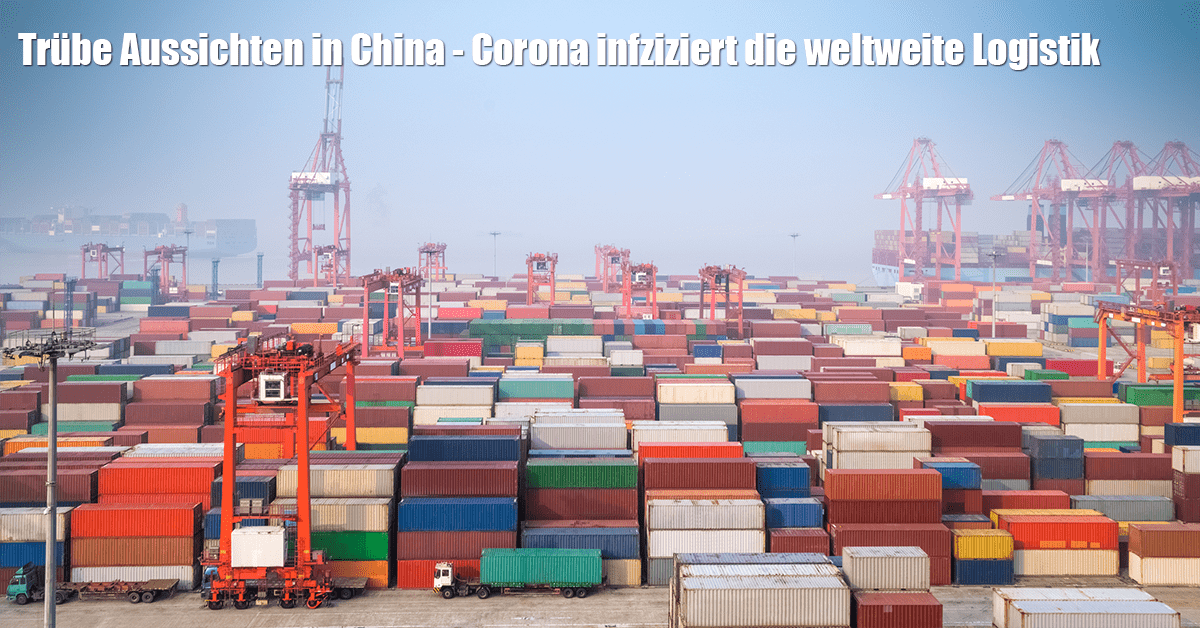
Until now, it was almost unimaginable to this extent, but the coronavirus has made it a bitter reality: China's entire freight traffic has virtually ground to a halt. At container ports, the largest shipping containers in the logistics chain are piled high, and aerial photos show scenes reminiscent of a child's bedroom, with many colorful rectangular blocks scattered about. Capacity limits are slowly being reached, and port masters no longer know where to stack the goods. Particularly problematic are perishable goods such as frozen pork, beef, and poultry. The main consequences: Not only are transport drivers no longer allowed to drive due to the highly contagious pandemic, but there is also a critical shortage of electricity to keep the fresh products refrigerated. This shortfall is resulting in staggering costs. Extremely problematic for the Chinese population: Since African swine fever has also broken out alongside the coronavirus, the country is now heavily reliant on meat imports. The swine fever has forced the culling of hundreds of thousands of domestically raised animals.
Virtually all sea freight transport routes are affected
The main focus is therefore on maritime transport to and from China – due to its connection to all global networks, the decline in transport automatically affects Europe and the rest of Asia. Currently, it doesn't look like this situation will improve dramatically, as a huge backlog has built up that now needs to be cleared as soon as everyone is allowed to return to work. Even though the most urgent goods can be transported by air freight, this is also very limited due to the lack of belly cargo capacity (cargo space used in passenger aircraft).
Russia draws first hard borders
To at least partially counter the spread of the coronavirus, Russia has already imposed an official entry ban on Chinese nationals. While this is a very drastic step, it is at least a temporary reaction to the news from Asia. The main problem for both sides is that Russia has always been economically intertwined with China; the two countries are each other's largest trading partners. With a trade volume of 110 billion US dollars, the two nations set an all-time record last year. In the first weeks of 2020, Russian exports to China fell by a full third.
The economic risk for Germany should not be underestimated
The standstill in China is already having serious consequences for the German economy. Particularly for companies heavily reliant on exports from China, a sense of disillusionment is quickly setting in: one can practically feel that it will be some time before Chinese production returns to full capacity. The situation is even worse for companies that depend almost exclusively on Chinese suppliers. This domino effect is thus being felt across half the globe. According to calculations by the German Institute for Economic Research (Ifo), the coronavirus outbreak in China has the potential to significantly weaken overall economic growth in Germany.
Solutions and ways
The South China Morning Post (https://www.scmp.com/) recently reported that the number of new infections has decreased significantly. Nevertheless, the situation remains so tense that it is difficult to predict when and to what extent China's export economy will fully recover. Therefore, for now, the only option for you and us is to stay in contact to jointly monitor the current situation and develop individual solutions.
As your trusted logistics partner, we will keep you updated with the latest information from the affected regions at all times. Please contact us if you have any specific questions about the coronavirus.