
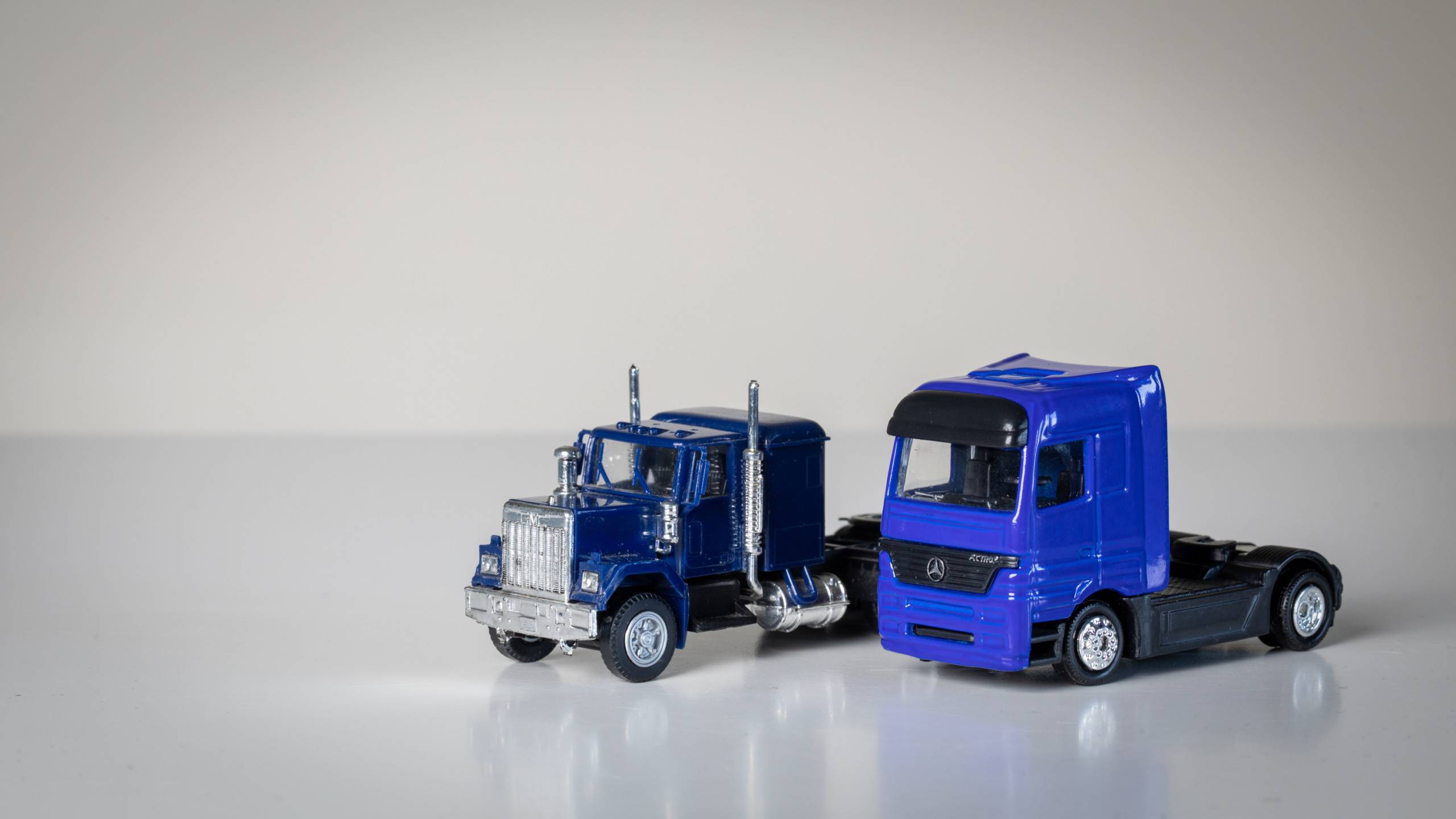
Have you ever wondered why trucks in America simply look so much better than in Germany? There, truckers not only cruise the highways with polished chrome trim and flashing accessories, but the mentality of truck drivers in America also seems to be different in general. The most striking distinguishing feature, however, is the long hood, which is why the term "long-hooded truck" has become established.
In the 1986 film "Didi on Tour," Dieter Hallervorden passed his exciting truck driving test and was henceforth a "truck driver" tasked with hauling used oil drums around the countryside. While the film had its typical "Didi" charm, it was nowhere near as cool as Bruce Willis, who escapes a fighter jet in "Live Free or Die Hard.".
The magnificent advantages of long-snouted dogs
Above all, truckers agree that a longer hood automatically provides a greater sense of security due to the increased crumple zone. Furthermore, the engines and other important components are more easily accessible for repairs. Even more importantly, those who are sometimes on the road for weeks at a time need space. A long-nosed truck offers this, as the interior is almost as spacious as a caravan. So-called cab-over-engine trucks lack these advantages; in particular, the need to tilt the entire cab for maintenance and repairs makes a permanently installed coffee machine virtually impossible.
There were also long-nosed breeds in Germany at one time
Until the 1950s, long-hooded trucks were a fairly common sight on the roads in Germany. However, the then Minister of Transport, Hans-Christoph Seebohm, came up with the groundbreaking idea that trucks could only be a maximum of 15 meters long and weigh no more than 24 tons. This regulation meant that truck manufacturers for the German market had to come up with a solution – the first reduction was made to the hood, so as not to compromise the cargo area. While the United States also has certain regulations regarding length, these only apply to the trailer and not the tractor unit.
The front-wheel drive came and prevailed
Even though drivers now had to sit directly on the hot engines and felt less safe due to the lack of a crumple zone, the cab-over-engine truck found its way into Germany and Europe. Gradually, a few advantages of using the new tractor units became apparent: without long hoods, the trucks offered better visibility and were significantly more comfortable and maneuverable. Furthermore, these vehicles are now permitted to be 18.75 meters long and weigh up to 40 tons – combined with their good handling, this is reason enough for many European companies to leave their existing fleets unchanged for the time being.
Russia also likes "long snouts"
Long-hooded trucks were very popular in Russia from the early 2000s and were imported in large numbers from the USA to distribute goods and merchandise, primarily from the Moscow region, across the country. However, cab-over-engine trucks have now gained the upper hand there as well. What is already commonplace in Germany is still completely unacceptable to most drivers in Russia: women are officially not yet allowed to drive trucks in Russia. However, many resourceful transport companies know how to circumvent this Soviet-era law.
Truck tuning and April Fools' jokes
While it's certainly not the cheapest solution, those who still prefer hoods up to two meters long can have them transplanted onto their Scania truck. The company Vlastuin Truck & Trailservice converts standard cab-over trucks for a considerable amount of money. The demand isn't just noticeable to the conversion company, but also to the Eurotransport portal. Back in 2016, the editorial team came up with a little April Fool's joke about it, which was very well received.
Joking aside: Is a comeback of the long-hooded truck possible in Europe?
EU Directive 96/53, which comes into force on September 1, 2020, allows manufacturers at least 90 centimeters of leeway to extend the cabin length. How this space can be used efficiently is currently a matter of speculation; an onboard toilet is just as conceivable as a shower or its use for lower-CO₂ alternative propulsion systems. However, it will probably result in more rounded cabin designs, as Verkehrsrundschau suggests.
There's a lot happening in the design and space of truck production. Anyone interested in logistics will be curious to see how the appearance of these vehicles on the road will change in the long run. One thing seems certain, though: Optimus Prime probably won't be among them..