
In the era of Fridays for Future demonstrations and high voter turnout, the Green Party's focus has long since expanded beyond simply getting "dirty diesel" vehicles off the roads. As part of its environmental policy, the International Maritime Organization (IMO) introduced new regulations in January 2020 aimed at reducing marine pollution from shipping. The organization's self-imposed goal: to halve CO2 emissions from the sea by 2050. OCS knows what needs to be done.
A particularly important characteristic stipulated by the IMO is the permissible sulfur content in fuel. From the beginning of 2020, this may not exceed 0.5 percent – previously it was around 3.5 percent. Based on experience with shipping in the North and Baltic Seas, where the sulfur content in fuel has been limited to 0.1 percent since 2015, the organization is confident that it will also achieve a sustainable reduction in emissions for international maritime transport.
IMO 2020 aims to improve its environmental footprint
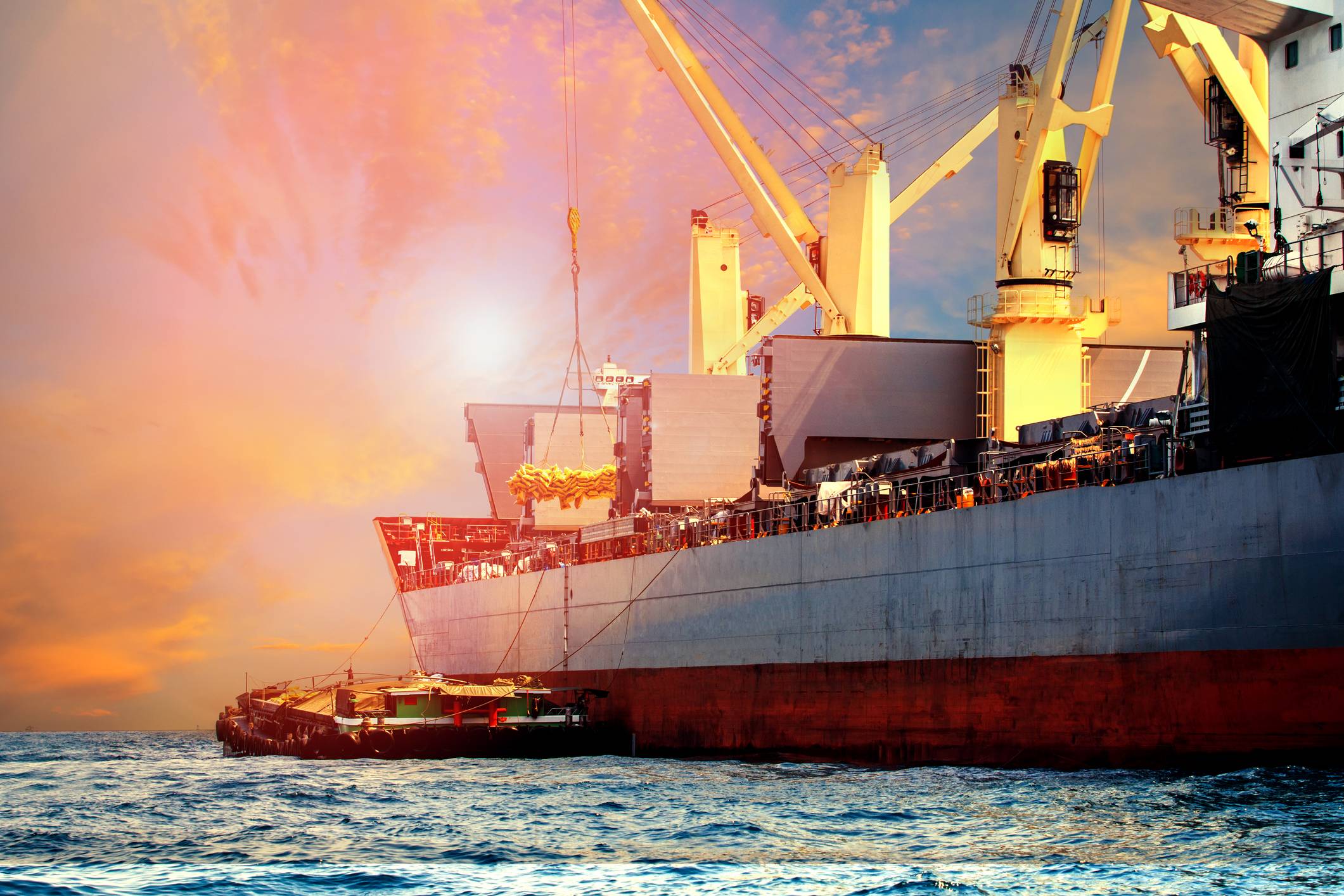
There's no point in sugarcoating it, because the numbers speak for themselves. International shipping, with annual emissions of around one billion tons of carbon dioxide, is responsible for almost three percent of all man-made particulate matter. And we're not just talking about container ships or oil tankers that supply the world with essential goods and raw materials, but also the tourism industry, which has been traveling the globe for years with fully booked cruise ships. Norway has already reacted drastically to the impact on residents along the fjords and to protect its own landscape: Cruise ships powered by heavy fuel oil are no longer allowed access to the fjords. The IMO aims to restore the balance on the water.
What does that mean for you as a customer?
Things are moving fast: Although the IMO regulation only comes into effect on January 1, 2020, we expect freight rates to rise as early as the fourth quarter of 2019, or at least a surcharge for short-notice quote requests. The direct pass-through of the additional costs resulting from the regulation is particularly likely. Recent studies indicate that costs, especially on the Asia-Europe route, could increase by up to 50 percent. On the other hand, weaker demand on this route could offset the increased costs. Unfortunately, in our view, it is impossible to predict exactly how fuel prices will develop. Changes in fuel prices depend on various factors, such as geopolitical events or trade wars, OPEC measures, or the global economy in general. IMO2020 will likely simply be another factor contributing to price fluctuations.
The only certainty is that the regulation will lead to higher costs than before, as the new fuel, with its sulfur dioxide content of just 0.5 percent, is significantly more expensive to produce. Conversion costs must also be factored in, so a medium-term increase of USD 150 to 250 per TEU must be expected. Every company dependent on sea freight will therefore face rising costs after the IMO 2020 regulation comes into effect. Like every other logistics company, we will have to pass these costs on to our customers.
Understanding for environmental measures is increasing
Even though the term "increased costs" may sound complicated and difficult at first, we believe that the return on these investments is a significant gain. We are the ones who can actively do something for our environment, right here and now. The sustainability of such measures secures our future and that of our children, and will go down in history as a small milestone contributing to more environmentally friendly transportation. And perhaps the increased costs will simply lead to a greater reliance on regional production, thus strengthening the local economy. Creating new jobs in our local regions is, after all, another priority. With this in mind, increased costs are easier to bear, aren't they?
The OCS forwarding company also makes its own contribution to environmental protection
There are certainly measures we logistics providers can take ourselves to operate in an environmentally conscious yet profitable manner under the new regulations. After all, the logistics sector remains the most important source of added value for people worldwide. For example, OCS collaborates with shipping companies that use liquefied gases as fuel and are actively working to reduce CO2 emissions. And "active" sounds just as "attractive" to us: therefore, we are also committed to environmental protection and support the Ocean Cleanup initiative. When we have to discuss something with partners or customers in more distant locations within Germany, we travel by train instead of by plane. Furthermore, we exclusively use LED lighting in our offices, which allows us to work efficiently and energy-efficiently, even during the winter months. Because we are certain: everyone, truly everyone, can try to protect the environment in their own small way. On a larger scale, these are many small pieces of the puzzle that ultimately make a difference – before the lights perhaps go out completely one day.
Do you need more information on this topic?
Please don't hesitate to contact us directly. Your logistics experts at OCS will be happy to advise you further if you are still unsure how you and your company can contribute to environmental protection. We will also be happy to provide you with more detailed information about costs once the new price level is announced.